Why Data Protection Matters
By the end of this module, you'll be able to:
- distinguish between the UK GDPR and the Data Protection Act 2018 and explain how they work together as the UK's data protection framework.
- identify the roles of data controller, data processor and data subject in a given workplace scenario and state the primary legal responsibility each carries.
- explain why data protection is everyone's responsibility — not just IT — by recognising the range of formats (electronic, paper, audio, CCTV) that fall within scope.
A Tuesday Morning That Changed Everything
Imagine Sarah, a 34-year-old primary school teacher in Manchester. She wakes up on a Tuesday morning, makes a coffee, and checks her phone. There are seventeen missed calls from her bank. Her current account has been emptied. Three credit cards she never applied for have been opened in her name. Her credit score, which she had spent years carefully building to buy her first home, is in ruins.
What happened? Six months earlier, a marketing agency she had never heard of suffered a data breach. That agency had purchased a list of contact details from a company she had done business with — a company that, buried in paragraph forty-seven of its privacy policy, had reserved the right to share customer data with "trusted partners." Sarah's name, address, date of birth, email and phone number had passed through five different organisations before landing on a criminal forum on the dark web, where they were sold for the price of a takeaway coffee.
Sarah will spend the next eighteen months trying to repair the damage. She will miss her mortgage application deadline. She will develop anxiety so severe that her GP signs her off work for three months. Her relationship will strain under the financial pressure. And the most painful part? She will never know exactly which organisation failed her, because the data was passed around so many times that the trail has gone cold.
Why This Lesson Exists
This scenario is not dramatic licence. Variations of it happen every single day in the United Kingdom. The Information Commissioner's Office receives more than 30,000 personal data breach reports each year, and those are only the breaches that organisations notice and report. Behind every breach statistic is a Sarah — a real person whose ordinary life has been disrupted, sometimes catastrophically, because someone, somewhere, treated their personal data carelessly.
This is why data protection matters. Not because there is a law (although there is). Not because there are fines (although they are substantial). But because the way we handle other people's information has direct, tangible consequences for human lives. Once you internalise this truth, every other part of this course — every principle, every right, every procedure — becomes obvious, even intuitive. Data protection is, at its heart, a profoundly humane discipline dressed up in legal language.
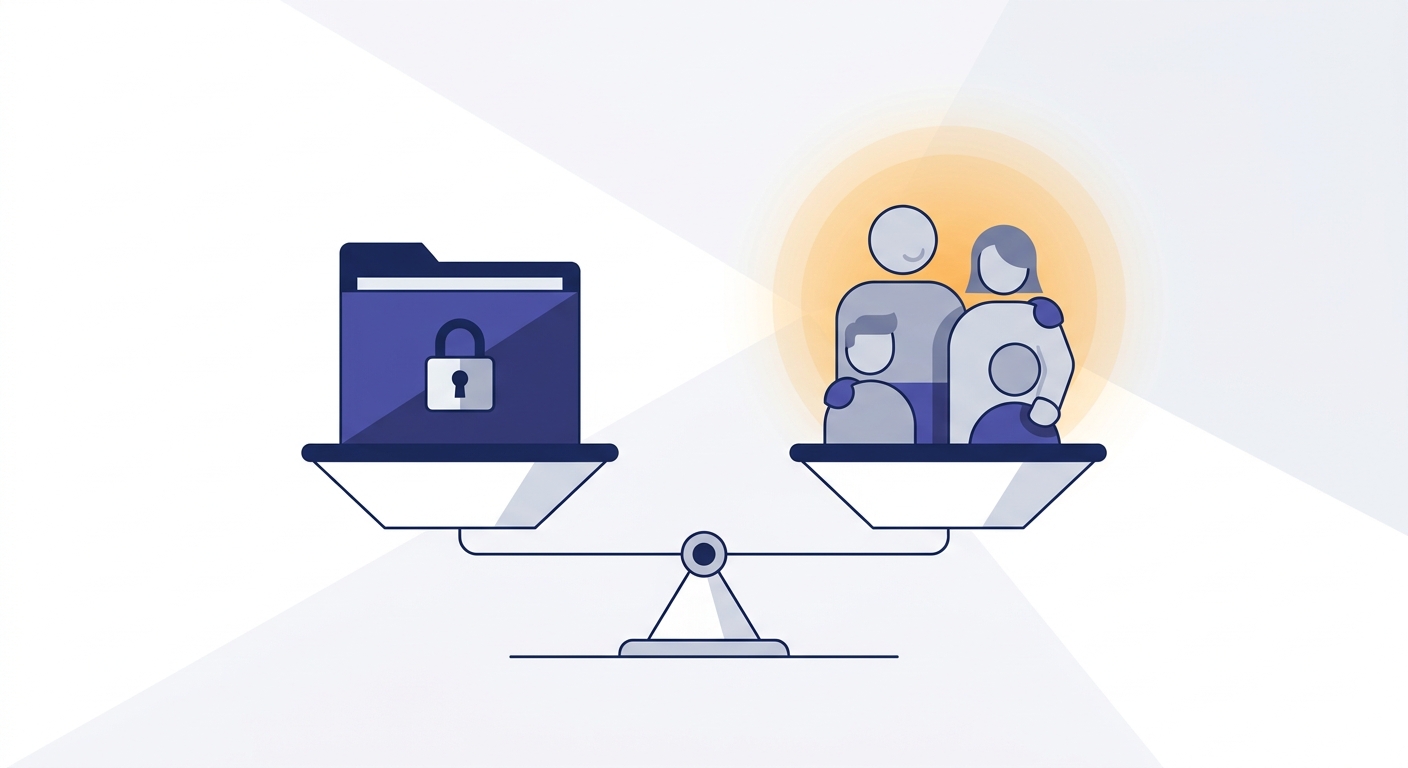
The Three Reasons Data Protection Matters
When organisations explain data protection to their staff, they often focus on one reason: "we have to do it because it's the law." That is true, but it is also the least interesting and least motivating reason. Compliance-by-fear produces tick-box behaviour, and tick-box behaviour is precisely what causes the breaches in the first place. To do data protection well, you need to understand all three reasons it matters — and you need to feel why each one is important.
Reason One: The Legal Duty
Yes, there is a law. In fact, there are two interlocking laws: the UK GDPR (the United Kingdom's version of the General Data Protection Regulation, retained in domestic law after Brexit) and the Data Protection Act 2018. Together, these form the most comprehensive personal data regime the UK has ever had. They are enforced by the Information Commissioner's Office (ICO), an independent regulator with genuine teeth.
The financial consequences of getting this wrong are serious. The ICO can impose fines of up to £17.5 million or 4% of an organisation's annual worldwide turnover, whichever is higher. British Airways was fined £20 million in 2020. Marriott International was fined £18.4 million. Even charities, councils and small businesses regularly receive six-figure penalties. But the fines are only the visible tip of the iceberg. Below the surface lie regulatory investigations that can drag on for years, enforcement notices that force expensive operational changes, mandatory audits, and the legal costs of defending civil claims from affected individuals.
And it is not only the organisation that bears the risk. Under UK law, certain breaches can result in personal liability for directors, and the criminal offences in section 170 of the Data Protection Act 2018 — such as knowingly obtaining or disclosing personal data without consent — can lead to unlimited fines for individuals. The era of "I was just doing my job" as a defence is over.
Reason Two: Reputational and Commercial Risk
If the legal risk is the stick, the reputational risk is the wrecking ball. Modern customers, citizens and service users have remarkably long memories when it comes to organisations that have leaked their data. Polling by the ICO consistently finds that around 80% of UK adults say they have low trust in how organisations handle their personal information, and that figure spikes after every high-profile breach.
The commercial impact of a serious breach typically dwarfs the regulatory fine. Consider what actually happens when a breach hits the news:
- Customers leave. TalkTalk lost over 100,000 customers in the months following its 2015 breach, and its share price never fully recovered.
- Acquisition deals collapse. Verizon famously reduced its offer for Yahoo by $350 million after Yahoo's historic breaches came to light during due diligence.
- Insurance premiums rise. Cyber insurance is now one of the fastest-growing categories in commercial insurance, and a breach history makes cover dramatically more expensive — or impossible to obtain.
- Staff morale collapses. Employees who feel their employer cannot be trusted with the public's data often start questioning whether it can be trusted with theirs.
- Partners walk away. Procurement teams at major organisations routinely demand evidence of data protection maturity before signing contracts. A poor reputation locks you out of tenders.
In a service economy, trust is the most valuable asset on the balance sheet. Data protection is, quite literally, trust management.
Reason Three: The Ethical Duty to Data Subjects
This is the reason that should matter most, and it is the one that compliance training most often skates over. When someone shares their personal information with your organisation — whether they are a customer buying a kettle, a patient registering with a clinic, a job applicant uploading their CV, or a citizen applying for a benefit — they are placing something genuinely valuable in your hands. They are trusting you with a fragment of their identity.
The harms that flow from mishandling that trust are not abstract. They include:
- Financial harm — fraud, identity theft, drained bank accounts, ruined credit scores, denied mortgages.
- Physical harm — domestic abuse survivors whose new addresses are leaked to their abusers; vulnerable witnesses whose identities are disclosed; activists in repressive contexts who are outed to hostile authorities.
- Psychological harm — the chronic anxiety of knowing your information is "out there," the violation of having intimate details exposed, the helplessness of being unable to undo what has been done.
- Social harm — discrimination based on disclosed health conditions, sexuality, religion or political views; damaged relationships when private communications are leaked; reputational damage that can follow someone for decades online.
- Loss of autonomy — the fundamental human ability to control your own narrative, to decide what others know about you, to present yourself on your own terms.
Data protection law exists because Parliament, and before it the European Parliament, recognised that in the digital age, personal information has become so concentrated and so consequential that ordinary people need legal protection from its misuse. The law is the floor, not the ceiling. The ethical duty goes further: it asks you to handle other people's data the way you would want yours handled — with care, with respect, and with a constant awareness that there is a human being on the other end of every record.
Personal data is not just information on a screen. It is a fragment of someone's life — and when we lose it, leak it or misuse it, we cause real harm to real people.
The Scope Is Broader Than You Think
One of the most common misconceptions in workplaces across the UK is that "data protection is an IT problem." It is not. Data protection law applies to all personal data, in all formats, in all parts of an organisation. That includes:
- Electronic records — databases, spreadsheets, emails, CRM systems, cloud documents, chat messages.
- Paper records — application forms, contracts, handwritten notes, sign-in sheets, printed reports left on desks.
- Audio and video — CCTV footage, recorded phone calls, video conferences, voicemails.
- Biometric and physical data — fingerprints, photographs, even physical samples in some contexts.
- Verbal disclosures — a careless conversation in a lift, a phone call overheard on a train, gossip in the staff kitchen.
If it relates to an identifiable living person, it is personal data, and the law applies. This is why every employee — not just the IT team, not just the legal team, not just the Data Protection Officer — has a meaningful role to play. The receptionist who lets a stranger walk through to the office floor, the manager who emails a staff spreadsheet to the wrong recipient, the contractor who loses an unencrypted USB stick, the consultant who discusses a client's case in a crowded café — each of them is a potential point of failure, and each of them is a potential point of protection.
Why This Course Exists, and What You Will Gain
Over the next 29 lessons, you will build a comprehensive, working understanding of how UK data protection law operates and what it requires of you in practice. You will learn how to recognise personal data, how to handle it lawfully, how to respond when individuals exercise their rights, how to spot and report breaches, and how to make good decisions in the grey areas the law inevitably leaves open.
This is not a course designed to turn you into a lawyer or a Data Protection Officer — those are specialist roles requiring deeper, role-specific training. It is a course designed to give every professional in a modern UK organisation the knowledge, instincts and confidence to do the right thing with personal data, every day, without having to ask. By the time you finish, data protection will not feel like a burden imposed from above; it will feel like a natural extension of professional integrity.
Reflection Exercise: The Five Things You Hold
Pause and reflect for a few minutes before moving on.
Without consulting any documents, list five specific pieces of personal data that your organisation holds about its staff, customers, service users or members of the public. Be concrete — not "contact details" but "home address," not "HR data" but "sickness absence records."
Now, for each item, ask yourself three questions:
- If this single piece of information were leaked publicly tomorrow, what specific harm could it cause to the person it belongs to?
- Who, inside or outside the organisation, currently has access to it — and do they all genuinely need it?
- If you had to explain to that person, face to face, how you protect this information, what would you say? Would you be proud of the answer?
Write your answers down. Keep them. You will return to this exercise at the end of the course and be surprised at how differently you see it.
A Brief Map of the Journey Ahead
The lesson that follows this one will take you into the legal framework itself — the UK GDPR and the Data Protection Act 2018 — and explain how these two pieces of legislation interact, what they cover, and how the ICO enforces them. From there, the course builds methodically: the vocabulary you need to speak the language of data protection fluently; the categories of personal data and the heightened rules around the most sensitive types; the seven core principles that underpin every decision; the six lawful bases that justify any processing activity; the eight rights that individuals can exercise against you; the accountability and governance frameworks that hold it all together; the security practices that prevent breaches and the response procedures that contain them when they happen; and finally, the practical daily habits that translate all this knowledge into real-world behaviour.
It is a substantial journey, but it is a coherent one. Every lesson connects to the others. By the end, you will not just know the rules — you will understand why they exist, and you will be able to apply them with judgement in situations the rules never anticipated.
Key Takeaway: Everyone's Business
Data protection is not the IT department's problem. It is not the legal team's problem. It is not the Data Protection Officer's problem.
It is everyone's problem, because every person who handles personal data — in any format, in any context — can either protect the people behind that data or fail them. The law, the reputational risk and the ethical duty all point in the same direction: handle other people's information with the care, respect and seriousness it deserves.
Get this right, and you protect your organisation, your colleagues, your customers and yourself. Get it wrong, and the consequences ripple outwards in ways that are often impossible to repair.
Enjoyed this preview? Enrol to unlock all 41 lessons + your certificate.
Training a team? Buy seats for your team →