Copywriting Is Salesmanship in Print
Welcome to the Craft That Pays for Itself
Before we write a single headline, run a single piece of research, or open a single document, we have to settle something fundamental — something that, if you get wrong, will sabotage every word you write for the rest of your career.
Copywriting is not writing.
That sentence will offend some people. Good. It needs to. Because the single biggest reason most copy fails — corporate copy, freelance copy, founder copy, agency copy — is that the person producing it thinks they're writing. They're crafting sentences. They're polishing phrases. They're trying to sound smart, sound human, sound on-brand, sound clever. And while they're doing all of that, the reader is leaving.
Copywriting is a different discipline entirely. It shares a keyboard with writing, and it shares the alphabet with writing, but its job, its measurement, and its mindset are fundamentally different. A novelist's job is to move you. A journalist's job is to inform you. A poet's job is to make you feel something true. A copywriter's job is far narrower and far more brutal: get a specific reader to take a specific action.
Buy this. Click this. Book this. Reply to this. Sign up for this. Download this. Add to cart. Pick up the phone. Walk through the door.
That's it. That's the whole job. If the reader takes the action, the copy worked. If they don't, it didn't. There are no style points. There are no consolation prizes for a beautifully turned phrase that didn't sell. The work is judged in conversions, not compliments — and that is the most liberating and the most disciplining truth you'll learn in this entire course.
Copy is not written. Copy is assembled. It is a machine for moving a reader from indifference to action — and every part either does that job or it gets thrown out.
Content Informs. Copy Converts.
Let's draw the cleanest line in marketing.
Content is anything written to inform, educate, entertain, or build a relationship over time. Blog posts. Newsletters. YouTube scripts. Tweets. Podcasts. White papers. Tutorial guides. Content's success is measured in attention — views, reads, dwell time, shares, subscriptions. Content plays a long game. It builds authority. It nurtures audiences. It teaches.
Copy is anything written to drive a specific action right now. Sales pages. Ads. Email subject lines. Product descriptions. CTAs. Landing pages. Order forms. Checkout flows. Cold emails. Copy's success is measured in conversion — clicks, signups, purchases, replies. Copy plays a short game. It moves money. It books meetings. It closes.
Here's a useful test. Read a piece of writing and ask: If the reader finishes this and does nothing, has it failed? If yes, you're looking at copy. If a thoughtful nod and a saved bookmark is a win, you're looking at content.
Both are valuable. Both have a place. The world's best brands use both, woven together. But they are not the same skill, and one of the most expensive mistakes a business makes is hiring a content writer to do a copywriter's job — or worse, hiring a copywriter who doesn't realise the difference and writes 1,200 thoughtful, balanced, informative words on a page that needed to sell.
Two examples, same product
Imagine you sell a sleep supplement.
Content version: "The science of sleep is fascinating. Adults need between seven and nine hours of quality sleep per night to maintain cognitive function, immune health, and emotional regulation. In this article, we'll explore the four stages of the sleep cycle, the role of magnesium, and how modern lifestyles disrupt our circadian rhythms…"
Useful. Informative. Builds trust over time. Sells nothing today.
Copy version: "If you're lying awake at 2:47 a.m. again, scrolling, calculating how few hours you've got left before the alarm goes off — this is for you. One capsule. Forty minutes before bed. Wake up at 6:30 like a person who actually slept."
Same product. Same facts underneath. One informs. One converts. Know which one you're writing — every single time you sit down to write — and your career is already ahead of 80% of the people calling themselves copywriters.
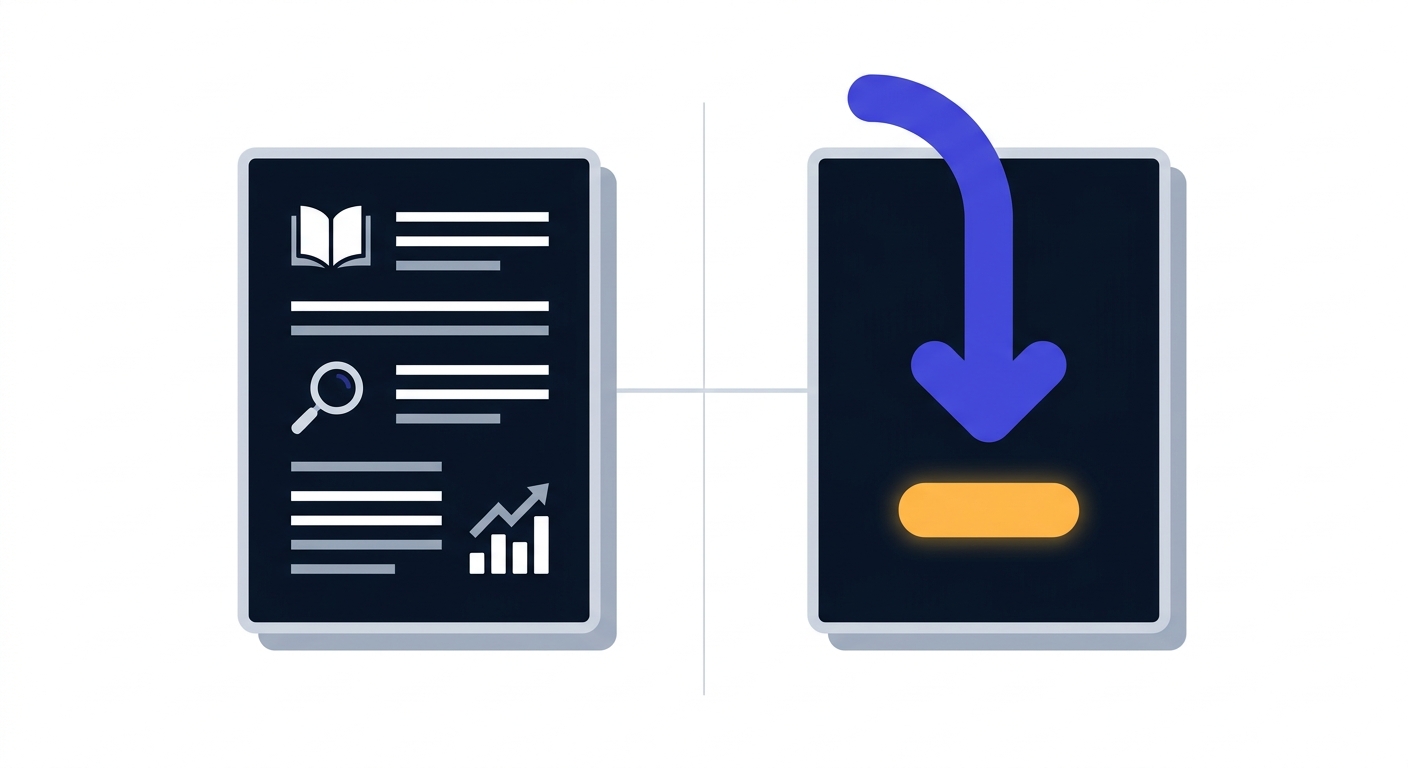
Clear. Relevant. Persuasive. In That Order.
If copy has one job, then it has three non-negotiable qualities. Master these three and you'll out-write almost everyone in your market — even the ones with bigger vocabularies, fancier degrees, and more flattering portfolios.
- Clear. The reader understands, instantly, what you're saying and what you want them to do. No ambiguity. No "wait, what?" No mental work. Clarity is not the opposite of sophistication — it is sophistication. The smartest writers in the world write at a Year 8 reading level not because they have to, but because they refuse to make the reader work for the meaning.
- Relevant. What you're saying matters to this specific reader, right now. You've correctly identified who they are, what they want, where they are in their buying journey, and what language they use to describe their own situation. Relevance is the difference between an ad that interrupts and an ad that feels like it was made for you personally.
- Persuasive. You give the reader a reason — emotional first, logical second — to do the thing. You make the action feel inevitable, low-risk, and obviously the right move.
Notice what's not on that list. Clever is not on the list. Creative is not on the list. Beautiful is not on the list. Grammatically perfect is not on the list. These are the things bad writers chase because they're easier to admire and easier to defend in a meeting. They're also the things that get cut by good editors at every great agency on earth, every single day.
Cleverness is the enemy of clarity. The pun that makes you smile is the pun that makes the reader hesitate. The hesitation is the kill. A confused reader doesn't buy.
The Core Principle
The single most important sentence in this course: every sentence either earns attention or loses it.
There is no neutral. There is no "this sentence is fine." Each line either drags the reader one inch further toward the action, or it gives them an excuse to leave. The reader's attention is a leaking bucket — if a sentence isn't actively patching the hole, it's making it bigger.
Hold every sentence you write to this standard. Ruthlessly. Especially the ones you're proud of.
The Two Questions the Reader Is Always Asking
Here is something nobody tells you when you start out — and it changes the way you write the moment you internalise it.
Your reader is not reading your copy. Not really. They're conducting an interview. They're sitting across from your words with two questions running on a loop in the back of their mind, and every sentence you write is being silently audited against those two questions.
Question one: "What's in it for me?" (WIIFM)
This is the brutal one. The reader does not care about your company's heritage, your founder's journey, your award-winning team, your patented technology, or your industry-leading methodology. Not yet. Maybe not ever. They care about themselves — their problem, their goal, their fear, their desire, their day, their evening, their next Monday morning. Every word you write that isn't connected, clearly and quickly, to something they want or something they're trying to escape is a word that's losing the sale.
This isn't because readers are selfish. It's because they're busy. They're scrolling on a phone in a queue. They're skimming an inbox between meetings. They've got 47 other tabs open. You have, generously, three seconds to convince them that this — this thing in front of them — is for them and worth their next thirty seconds.
WIIFM is the lens. Every sentence, hold it up to the light: What is in this, for them? If you can't answer in a heartbeat, the sentence dies.
Question two: "Why should I believe you?"
This is the question that kills most beginner copy. The writer makes a promise — bigger, bolder, more dramatic — without ever stopping to wonder why a stranger would take their word for it. Promises without proof are noise. The reader's been promised everything by everyone. They've been disappointed by half of it. Their default setting is scepticism, and your job is not to overcome it with louder claims but to dissolve it with evidence.
Proof takes many forms, and we'll go deep on each in later modules: specifics (numbers, dates, names), demonstrations (show the thing working), social proof (other people like them got the result), credentials (why you're qualified to make the claim), guarantees (you put your money where your mouth is), and the most underrated of all — texture, the small concrete details that signal you've actually lived this and aren't just making things up.
Hold every claim you make up against question two. If a reader read this line and silently asked "says who?" — do you have an answer in the next sentence? If not, you're making promises in an empty room.
Emotion Decides. Logic Defends.
One more truth, and then we'll put you to work.
Buying decisions are not made the way we like to think they're made. We pretend we're rational actors weighing pros and cons, comparing specifications, calculating value. We're not. We're animals with sophisticated vocabularies. We decide in the gut and then we tell ourselves a story about why the decision was logical.
This is true of £4 toothpaste and £40,000 cars. The person buying the car has already decided — emotionally — that they want to feel successful, safe, in control, attractive, free. The brochure full of fuel-efficiency figures and warranty terms isn't what makes the decision; it's what lets them defend the decision to their partner, their bank, and the slightly disapproving voice in their own head.
This means good copy does two jobs in order. First, it ignites the emotion — the desire, the fear, the relief, the pride, the belonging. Then it hands the reader a tidy stack of logical reasons to justify the choice they've already half-made.
Lead with the gut. Land with the head. Get that order wrong — open with specs and features and rational arguments — and you'll find yourself writing perfectly reasonable copy that nobody buys.
Exercise: The Earn-or-Lose Audit
Take a piece of writing you've produced recently — a landing page, an email, a product description, a cold pitch, anything that was supposed to sell something. Print it out, or paste it into a document with wide margins.
Now go through it line by line, sentence by sentence, and mark each one with one of three labels:
- E — Earns attention (moves the sale forward: hooks, benefits, proof, vivid relevance, momentum toward the CTA)
- L — Loses attention (filler, ego, hedging, generic claims, throat-clearing, anything the reader could skip without losing the thread)
- ? — Unclear (you can't honestly tell which it is)
Be brutal. Pretend it's someone else's work and you're being paid to critique it.
Then: cut every L. Rewrite every ?. What remains is closer to copy than what you started with. Most writers find this exercise removes 30–50% of their words and doubles the strength of what's left. Do this once a week for a month and you will be a measurably better writer by Christmas.
Why This Lesson Comes First
You might be wondering why we've spent a whole lesson on what copywriting is before showing you a single formula, framework, or trick. Here's why.
Everything in this course — the headline formulas in Module 3, the persuasion frameworks in Module 4, the sales pages in Module 5, the emails in Module 6, the ad hooks in Module 7, all of it — rests on the foundation you just laid down. If you don't internalise that copy is salesmanship in print, that it's measured in action and not applause, that every sentence either earns or loses, that emotion decides and logic defends, and that the reader is silently asking WIIFM and "why should I believe you?" — then every technique you learn will sit on sand.
You'll learn the AIDA framework and use it to write something clever instead of something that sells. You'll learn the 4 U's of headlines and use them to be witty instead of urgent. You'll learn how to mine voice-of-customer research and ignore what you find because it doesn't sound writerly enough. The techniques only work when they're stacked on the right philosophy.
In the next lesson, we'll go deeper into the most practical, most immediately useful skill in the entire discipline: the difference between features, benefits, and emotional payoffs — and how to translate any dry product fact into language that makes a reader reach for their wallet. It's the workhorse of selling with words, and once you can do it on demand, you'll never write a flat product description again.
But first, the takeaway from today — the thing to write on the wall above your desk.
Lesson 1 Takeaway
Copywriting is salesmanship in print. Its job is to get a specific reader to take a specific action. Not to inform, not to entertain, not to impress — to convert.
Great copy is clear, relevant, and persuasive, in that order. Cleverness is the enemy of clarity. Every sentence either earns attention or loses it; there is no neutral ground.
The reader is always silently asking two questions: What's in it for me? and Why should I believe you? Answer both, in every piece, or lose the sale.
People buy on emotion and justify with logic. Lead with the gut. Land with the head.
And above all — be ruthless. The most valuable skill in this craft isn't writing words. It's cutting the ones that don't sell.
Enjoyed this preview? Enrol to unlock all 56 lessons + your certificate.
Training a team? Buy seats for your team →